

Depression treatment online may begin with a video-based evaluation where a licensed provider reviews your symptoms, health history, and safety. A provider may also use a validated screening tool to better understand symptom severity. Based on the evaluation, they may discuss therapy, medication management, or other appropriate care
Key Takeaways:
- Depression treatment online begins with a video-based evaluation, not a form you fill out alone.
- The length of an online evaluation and follow-up visits can vary based on your needs and the provider’s assessment.
- Providers may use screening tools and a safety check as part of the evaluation.
- Treatment options include therapy, medication management, or a combination of both.
- Telehealth can’t replace in-person or emergency care during an active crisis.
If you’ve never had a psychiatric evaluation before, “online” and “evaluation” together can sound intimidating. It isn’t a test you can fail, and it isn’t a form you fill out alone. It’s closer to an in-depth conversation with someone trained to ask the right questions, structured just enough to make sure nothing important gets missed.
This article walks through what actually happens during depression treatment online, in order, from booking to follow-up – so you know what to expect before your first appointment.
Depression treatment online refers to receiving evaluation, treatment, and follow-up mental health care through telehealth with a licensed provider. Depending on the individual’s needs, care may include psychotherapy, medication management, or other appropriate services. Some situations may still require in-person evaluation or care.
What Is an Online Depression Evaluation?
An online depression evaluation is a clinical assessment conducted by video to help a licensed provider understand your symptoms, how they’re affecting you, and what treatment options may be appropriate for your situation. A licensed provider – typically a psychiatric nurse practitioner, physician, or therapist – leads the visit and documents your symptoms the same way they would in an office.
The format is virtual, but a licensed provider can still conduct a structured mental health assessment through telehealth. Providers may use established diagnostic criteria, validated screening tools, and clinical history to understand symptoms and determine appropriate next steps. Some conditions or situations may require in-person evaluation.
Who Is a Good Candidate for Depression Treatment Online?
Telehealth may be an option for many adults experiencing symptoms associated with depression, but whether it is appropriate depends on the individual’s symptoms, medical history, safety needs, and access to appropriate care. Symptoms may include persistent low mood, loss of interest in daily activities, fatigue, sleep or appetite changes, or difficulty concentrating.
Telehealth may be particularly convenient for people who:
- Live in an area with few local psychiatric providers or long waitlists
- Have a work or caregiving schedule that makes in-person visits difficult to fit in
- Feel more comfortable discussing mental health from a private space rather than a waiting room
- Want ongoing medication management without traveling for every follow-up visit
- Are already stable on treatment and need consistent follow-up rather than an initial evaluation
Telehealth is not the right starting point if you’re in an active crisis. If you are having thoughts of suicide or self-harm right now, call or text 988 (the Suicide & Crisis Lifeline) or go to your nearest emergency room. A provider can assess whether your symptoms require a higher level of care than a virtual visit can safely provide.
Read About More: Online ADHD Evaluation for Adults: What to Expect
Before Your Appointment: How to Prepare
A little preparation makes the evaluation faster and more accurate. Before your visit:
- Complete intake forms early. These are usually emailed after booking and cover your health history, current medications, and reason for the visit.
- List your current medications and dosages, including anything prescribed by another provider.
- Note when symptoms started and whether anything specific triggered them – a loss, a life change, or nothing identifiable at all.
- Find a private, quiet space with a stable internet connection so you can speak openly.
- Write down two or three things you want addressed, so they don’t get lost once the conversation starts.
None of this needs to be polished. Providers are used to patients who show up with half-formed notes or none at all.
What Happens During the Evaluation, Step by Step
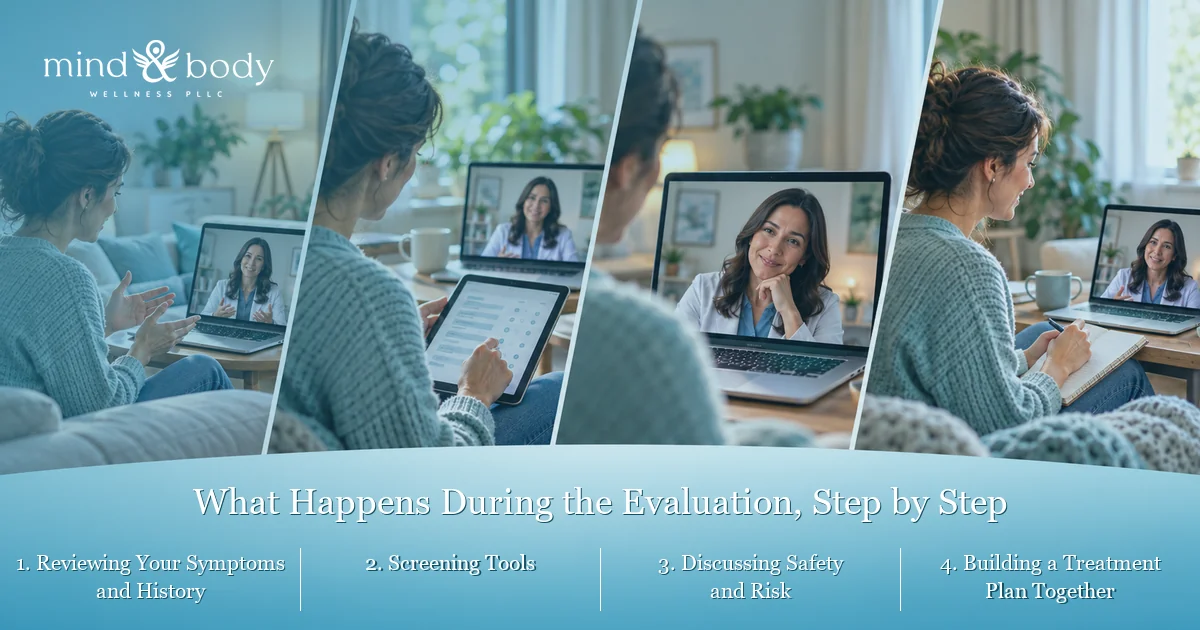
Reviewing Your Symptoms and History
The provider starts by asking what brought you in and how long it’s been going on. Expect questions about your mood, energy, sleep, appetite, concentration, and interest in things you normally enjoy. They’ll also ask about past mental health treatment, family history, substance use, and any medical conditions or medications that could be contributing to how you feel – thyroid issues and certain medications, for example, can produce depression-like symptoms.
Screening Tools
A provider may use a validated screening questionnaire to help assess the severity of depressive symptoms. According to the National Institute of Mental Health, depression is generally characterized by specific symptoms that persist over a period of time and affect daily functioning. A screening score is one part of the overall assessment and does not replace clinical judgment, but it can offer a benchmark that’s revisited at follow-up visits.
Discussing Safety and Risk
A depression evaluation may include a safety assessment – questions about thoughts of self-harm or suicide. This isn’t a red flag reserved for severe cases; it’s a standard part of many visits, similar to how a primary care provider checks blood pressure regardless of why you came in. Answering honestly here is what allows the provider to recommend the right level of care. If you’re currently in crisis, the 988 Suicide & Crisis Lifeline is available by call or text, 24/7.
Building a Treatment Plan Together
Once the picture is clear, the provider explains what they’re seeing and discusses options with you. This is a conversation, not a diagnosis handed down without context. You’ll have a chance to ask questions, raise concerns about medication, or say what has or hasn’t worked before.
What Treatment Options Come Out of an Online Evaluation
Depending on the evaluation, a provider may recommend one or a combination of:
| Treatment Option | What It Involves |
| Psychotherapy / counseling | Regular talk therapy sessions, often weekly or biweekly, delivered by video |
| Medication management | Prescribing and monitoring antidepressant medication, with follow-up visits to assess response |
| Combined therapy and medication | Therapy and medication may sometimes be used together when a provider determines that this approach is appropriate |
| Referral to a higher level of care | For symptoms too severe or complex for outpatient telehealth alone |
When medication is clinically appropriate, a provider may send a prescription electronically to your pharmacy, subject to clinical and regulatory requirements. Follow-up visits generally focus on how you’re responding to treatment and whether anything needs adjusting.
|
Ready to find out what treatment approach fits you? Whether that’s therapy, medication, or both, we’ll help you figure it out together. |
What an Online Evaluation Can’t Do
Telehealth has real limits, and a responsible provider will tell you when you’ve reached one. Virtual care cannot perform a physical exam, run in-person labs, or manage an active psychiatric emergency requiring immediate stabilization. If your symptoms point to a crisis, or if your case needs in-person testing, your provider should say so directly and help you find the right next step rather than trying to manage everything virtually.
Telehealth for Depression in North Carolina and Florida
Access to mental health care can vary by area, and some communities in North Carolina and Florida have fewer local psychiatric providers than others. Telehealth can help make care more reachable by allowing a licensed provider in your state to evaluate and treat you by video, though availability and appropriateness still depend on your individual situation.
Mind & Body Wellness PLLC offers telehealth services for patients in North Carolina and Florida. Depending on your needs and the services available, telehealth may provide a convenient way to connect with a licensed healthcare provider remotely.
The Bottom Line
Getting evaluated doesn’t have to mean waiting weeks for an appointment or driving an hour to sit in a waiting room. Depression treatment online can provide a structured evaluation that may include symptom review, screening, a safety assessment, and a conversation about appropriate next steps, without requiring every appointment to take place in person.
If what you’ve read here sounds like where you are right now, the next step is simple: book an evaluation, be honest during it, and let the provider help you figure out what actually fits your situation. That’s the whole point of the process.
Ready to get started? Book your online depression evaluation with a licensed provider serving North Carolina and Florida, or call (910) 387-3840. If you’re in crisis right now, call or text 988 or go to your nearest emergency room.
