

This article is for educational purposes only. It isn’t medical advice, and it can’t replace an evaluation by a licensed provider. If you have chest pain or aren’t sure what’s happening, get medical help right away.
A panic attack is a sudden surge of intense fear with strong physical symptoms, like a racing heart or trouble breathing. “Anxiety attack” is a popular term for intense anxiety that often builds gradually around a worry. NIMH uses “panic attack” for the sudden, intense episode. Both are treatable.
Your heart is pounding. Your chest feels tight, your hands are tingling, and a voice in your head is saying something is terribly wrong. A few minutes later it eases, and you’re left drained, shaky, and wondering what on earth just happened.
If that sounds familiar, you’ve probably asked whether it was a panic attack or an anxiety attack. People use both phrases, often for the same experience. This guide explains how they differ, what they share, and when it’s time to talk with a provider in North Carolina or Florida.
- A panic attack is a sudden, intense episode of fear with physical symptoms.
- “Anxiety attack” is a common phrase for intense anxiety that often builds with worry.
- Both can feel frightening, but both are treatable.
- Chest pain and similar symptoms deserve a medical check the first time.
- Cognitive behavioral therapy and medication can help.
- If you’re thinking about suicide, call or text 988.
What Is a Panic Attack?
According to the National Institute of Mental Health (NIMH), a panic attack is a one-time or occasional episode of intense fear with physical and emotional symptoms. Panic disorder is different. It involves frequent and unexpected panic attacks, along with ongoing worry about having more.
Panic Attack vs. Anxiety Attack: Side by Side
Here’s the honest answer first. “Anxiety attack” is a phrase most of us use in everyday life, and “panic attack” is the term you’ll see in NIMH’s material. The two overlap a lot. Still, many people use them differently, and the contrast below can help you describe what you felt.
| Panic Attack | “Anxiety Attack” (everyday use) | |
| Onset | Often sudden, sometimes with no clear trigger | Often builds over minutes, hours, or days |
| Trigger | May strike without warning, even during sleep | Usually tied to a worry or stressful situation |
| Intensity | Peaks quickly and feels overwhelming | Ranges from mild to severe |
| Feeling | Fear of losing control, or of dying | Dread, restlessness, constant worry |
| Duration | A few minutes to an hour, sometimes longer | Can linger much longer |
Don’t get hung up on the label. What matters is how much it affects your life, and whether it keeps coming back.
Symptoms of a Panic Attack
NIMH lists these common symptoms, and you may notice several at once:
- A racing or pounding heart
- Sweating, chills, or trembling
- Trouble breathing
- Dizziness
- Numbness or tingling in the hands
- Chest pain
- Stomach pain or nausea
- A sense of losing control
- Fear of death or impending doom
According to NIMH, attacks can last from a few minutes to an hour or sometimes longer. Some people have several in a day. Others have only a few in a year.
Attacks can also happen with no obvious danger, and they can wake you from sleep. That’s part of why they feel so unsettling.
What an “Anxiety Attack” Often Looks Like
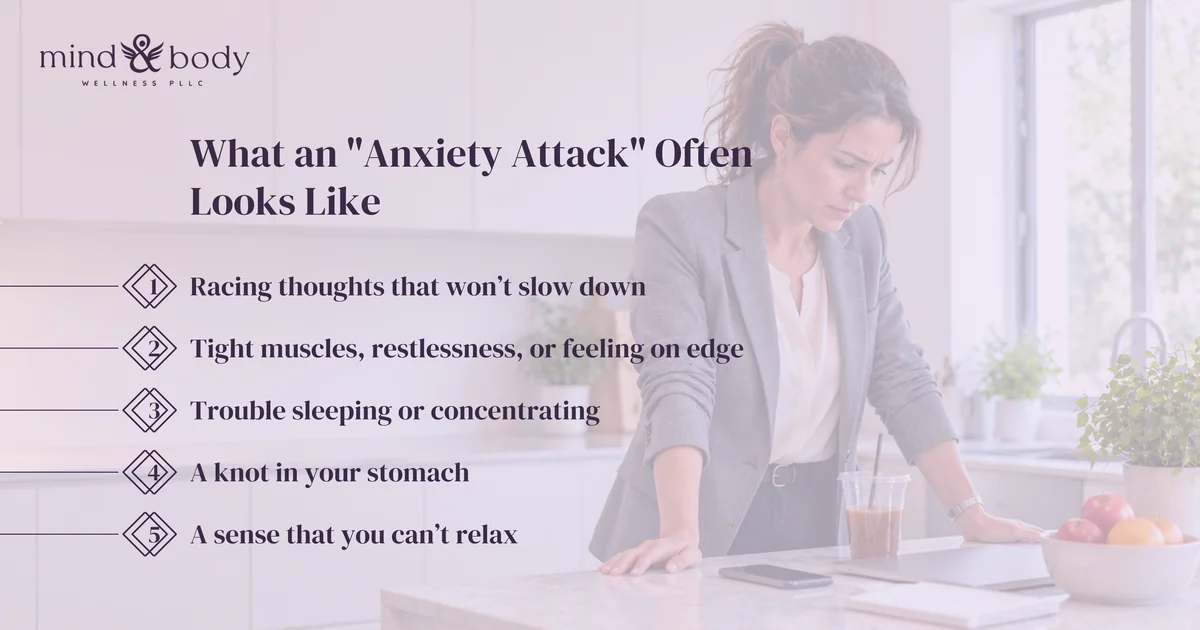
When people say anxiety attack, they’re often describing anxiety that ramps up in response to something specific, like a work deadline, a hard conversation, or a health scare. It might include:
- Racing thoughts that won’t slow down
- Tight muscles, restlessness, or feeling on edge
- Trouble sleeping or concentrating
- A knot in your stomach
- A sense that you can’t relax
The physical symptoms can overlap with panic. The difference is usually in the build-up. Anxiety tends to climb, while a panic attack can hit like a wave.
Why Do These Episodes Happen?
Researchers are still working out the full picture. NIMH notes that panic disorder sometimes runs in families, often begins in the late teens or early adulthood, and is more common in women than in men. Stress and environmental factors are also being studied.
Could Something Else Be Going On?
Not every racing heart is panic. Some medical problems can look similar, which is why the first episode deserves attention. NIMH notes that providers may do a physical exam to make sure an unrelated physical problem isn’t causing the symptoms.
If you’ve never had these symptoms before, especially chest pain or trouble breathing, get checked. A primary care provider can rule out medical causes, and a mental health provider can look at the full picture. If you think you may be having a medical emergency, call 911.
When Does It Become Panic Disorder?
One panic attack doesn’t mean you have panic disorder. NIMH explains that a diagnosis involves recurring, unexpected attacks, plus at least one month of worry about future attacks or changes in behavior to avoid them.
That second part matters. Many people start steering clear of places where an attack happened, like the grocery store, the highway, or a crowded meeting. Over time, life gets smaller. If that’s happening, it’s a good time to reach out.
Treatment Options
Panic and anxiety are very treatable. Most plans use therapy, medication, or both.
Cognitive Behavioral Therapy
NIMH calls cognitive behavioral therapy (CBT) the “gold standard” choice for psychotherapy for panic disorder. It helps you understand the fear cycle and change how you respond to it. Exposure therapy, including gentle practice with body sensations like a fast heartbeat, is a common part of CBT.
The good news for busy people: NIMH says psychotherapy can be effective whether it’s delivered in person or virtually, and online therapy makes it easier to start.
Medication
Antidepressants called SSRIs and SNRIs can help with panic symptoms, though NIMH notes they may take several weeks to work. Our post on how long antidepressants take to work walks through what to expect.
NIMH also describes benzodiazepines, which can quickly reduce symptoms but may lead to tolerance and dependence, so they are usually prescribed only for brief periods. Never start, change, or stop a medication on your own.
Coping Skills in the Moment
These skills don’t replace treatment, but they may help during an episode:
- Slow your breathing. Breathe in gently through your nose, then out slowly through your mouth.
- Ground yourself. Name five things you can see, four you can touch, and three you can hear.
- Remind yourself it will pass. Attacks usually peak and ease, even if it doesn’t feel that way.
|
Tired of dreading the next episode? You don’t have to manage panic or anxiety alone. Our licensed team can talk through what you’re feeling and what could help. |
How Telehealth Can Help
When panic keeps coming back, the idea of sitting in a waiting room can feel like too much. Virtual care lets you start from a place where you feel safe.
At Mind & Body Wellness, care is 100% virtual and provided by licensed providers for patients located in North Carolina and Florida. Our telemedicine services can include:
- Video therapy sessions from home, with HIPAA-compliant technology
- Medication management, when clinically appropriate
- The same provider from visit to visit
- Primary care support to rule out medical causes
We accept several major plans, including Aetna, Cigna, Florida Blue, Mutual of Omaha, Medicare, NC Medicaid, and Florida Medicaid. Coverage varies by plan, so confirm your benefits first.
When to Get Help Right Away
Call 911 or go to the nearest emergency room if you have chest pain, trouble breathing, or symptoms you think could be a medical emergency. If you’re having thoughts of suicide or self-harm:
- Call or text 988 to reach the 988 Suicide & Crisis Lifeline, available 24/7.
- Call 911 if you’re in immediate danger.
Does Mind & Body Wellness treat panic and anxiety in North Carolina and Florida?
Yes. We provide virtual therapy and medication management for patients located in North Carolina and Florida, when clinically appropriate. We accept several major plans, though coverage varies. Call (910) 387-3840 to ask about getting started.
Final Thoughts
Whether you call it a panic attack or an anxiety attack, what you felt was real, and you deserve support. The two experiences overlap, and the label matters less than how often it happens and how much it limits your life. Therapy, medication, and everyday coping skills can all help, and many people feel more in control with the right plan.
For more reading, the NIMH overview of panic disorder is a trustworthy place to start. And if you’re ready to talk, call (910) 387-3840 or message our team through the contact page. You don’t have to wait for the next episode.
