
According to CDC National Center for Health Statistics Data Brief No. 493, over 70% of primary care physicians reported they could provide comparable quality of care via telemedicine as in-person visits. For patients managing multiple chronic conditions, primary care reduces missed appointments, improves medication adherence, and creates a more complete health picture over time.
Key Takeaways
- Online primary care in North Carolina and Florida covers routine health management, medication refills, lab review, chronic disease monitoring, and preventive care
- Online nutritionists work alongside primary care to manage diabetes, hypertension, obesity, and heart disease
- Depression treatment online is clinically equivalent to in-person therapy for mild to moderate cases, per multiple peer-reviewed studies
- Telehealth platforms that offer same-provider continuity produce better outcomes than rotating provider models
- Medicaid and most commercial plans cover care visits with no added telehealth surcharge
- The best integrated virtual practices offer primary care, mental health, and nutrition in one platform to reduce care coordination gaps
What Does Virtual Primary Care Actually Cover?
Virtual primary care covers far more than many patients expect. It is not limited to minor illnesses or prescription refills. A well-structured telehealth practice manages routine care, chronic conditions, and preventive services comparable to in-person clinics.
Patients in North Carolina and Florida can access lab coordination, medication management, and ongoing health monitoring—all without needing frequent office visits.
What Conditions Suit Primary Care Best
Conditions that benefit most from primary care include hypertension, type 2 diabetes, anxiety and depression, ADHD, thyroid disorders, weight management, and preventive health. These all respond well to ongoing conversation, medication adjustments, and lifestyle guidance that work as effectively through a secure video platform as in person.
Physical procedures, imaging, and acute emergency presentations still require in-person evaluation. A responsible care provider recognizes these limits and refers you appropriately, continuing to manage your overall care through telehealth.
Why Consistent Provider Relationships Drive Better Outcomes
A 2023 study published in the Journal of General Internal Medicine found that patients with consistent care relationships had significantly lower hospitalization rates and better chronic disease control than those who rotated through different providers. This advantage applies equally to telehealth models when same-provider continuity is maintained.
|
Get Started with Virtual Care Today |
How Virtual Primary Care and Nutritionists Work Together
A nutritionist’s patients access through telehealth is no longer a luxury service. For patients where chronic disease management is an ongoing reality, including type 2 diabetes, cardiovascular disease, obesity, or inflammatory conditions, nutrition intervention is as clinically important as any medication. The challenge has historically been access and consistent follow-through on recommendations.
In-person nutrition counseling in North Carolina and Florida often means waiting weeks for a specialist appointment, driving to a separate office, and paying out-of-pocket if your insurer doesn’t cover the visit. According to HHS Telehealth.gov’s guide on telenutrition, telehealth-based nutrition counseling improves dietary adherence and clinical outcomes for patients with chronic conditions, including diabetes and heart disease. Consultations happen on your schedule, from your kitchen, often while you’re planning your meals.
What an Online Nutritionist Session Actually Involves
An online nutritionist does not simply hand you a meal plan and disappear. A qualified registered dietitian working through a telehealth platform performs a detailed dietary assessment, reviews lab results, identifies nutritional deficiencies, and creates a personalized nutrition plan that accounts for your specific conditions, medications, and lifestyle goals.
For patients with diabetes, this means carbohydrate management strategies that fit real-world eating patterns, not idealized clinical diets. For patients with heart disease, it means practical sodium and saturated fat reduction without eliminating foods that actually fit their culture and preferences. The goal is sustainable behavior change supported by genuine clinical expertise.
“When patients receive nutrition counseling alongside medical management for chronic conditions like diabetes, we see significant improvements in A1C, blood pressure, and quality of life. Telehealth has solved the attendance problem that previously made consistent follow-up nearly impossible.” – Dr. Dariush Mozaffarian, Cardiologist and Dean of Policy, Tufts Friedman School of Nutrition Science and Policy.
The Nutrition-Mental Health Connection
Research published in The Lancet Psychiatry has established strong links between dietary patterns and depression risk. Diets high in ultra-processed foods and low in whole grains, vegetables, and omega-3 fatty acids are associated with significantly higher rates of depression and anxiety. A nutritionist patient’s access through telehealth can address this connection alongside a primary care provider, creating a coordinated approach to both physical and mental health.
Read More About: How Your Primary Care Provider Keeps Medications Safe
Why Is Depression Treatment Online Growing?
Depression treatment online has expanded significantly since 2020, and patient outcomes data support its effectiveness. North Carolina and Florida have a significant shortage of mental health providers in rural areas, with several counties having virtually no licensed psychiatrists practicing locally. Telehealth closes that gap directly.
The HHS Office of the Assistant Secretary for Planning and Evaluation has documented that telehealth utilization for mental health treatment remains substantially above pre-pandemic levels, with behavioral health consistently ranking among the top telehealth use cases nationwide. Patients who previously went untreated due to stigma, distance, or scheduling barriers now have reliable and covered options for getting help.
How Depression Treatment Online Works in Practice
Online treatment typically starts with a virtual assessment by a licensed psychiatric nurse practitioner or care provider. They screen for depression severity using validated tools like the PHQ-9, review your health history, discuss treatment options including therapy and medication, and create a personalized care plan.
Medication management for depression through telehealth means regular virtual check-ins to monitor how antidepressants are working, manage side effects, and adjust dosing as needed. Most patients begin feeling meaningfully better within four to eight weeks of starting treatment with consistent provider support.
“The evidence is clear that telehealth-delivered depression treatment reduces symptoms at comparable rates to in-person care. More importantly, it reaches patients who would otherwise receive no care at all. That is the real public health win for Florida.” – Dr. John Torous, Director of the Digital Psychiatry Division, Beth Israel Deaconess Medical Center.
Why Telehealth Works Especially Well for Depression
Depression often creates its own barriers to care. The condition itself can make leaving the house feel impossible, returning phone calls overwhelming, or keeping scheduled appointments feel pointless. Depression treatment removes those structural barriers by meeting patients in their own environment.
|
Depression Treatment From Home, Covered by Insurance |
When Does Telehealth Outperform In-Person Care?
For most primary care and chronic disease management needs, telehealth services outperform in-person visits on the factors patients actually care about: speed, consistency, convenience, and privacy. Understanding the specific scenarios where telehealth excels helps patients make informed decisions about their care.
Telehealth works best for medication management, lab result reviews, chronic condition check-ins, mental health follow-ups, nutritionist consultations, and initial assessments for new symptoms. These categories account for the vast majority of primary care visits throughout any given year.
Situations Where In-Person Care Remains Necessary
Physical examinations requiring hands-on assessment, procedures like biopsies or injections, and urgent care situations requiring immediate intervention all require in-person visits. A responsible care provider recognizes these limits and facilitates referrals, coordinating your care rather than abandoning it when in-person evaluation is warranted.
The Attendance Advantage of Telehealth
One underappreciated advantage of telehealth is that it makes consistent care actually achievable for busy patients. Research from the Commonwealth Fund found that patients who used telehealth for primary care appointments were more likely to keep their scheduled follow-ups compared to patients relying solely on in-person visits. When the practical barrier to showing up is zero, patients actually show up.
Read More About: Virtual Primary Care for Florida Remote Workers
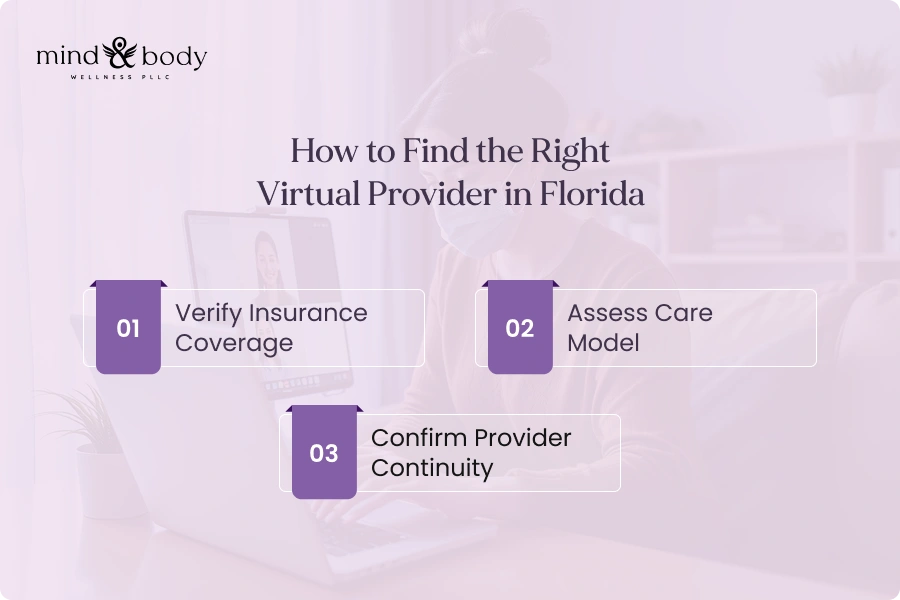
How to Find the Right Virtual Provider in Florida
Finding the right nutritionist telehealth services provider comes down to a few key criteria. Insurance coverage matters significantly. Verify that your specific plan covers virtual care visits and, if applicable, registered dietitian consultations before booking your first appointment.
Provider continuity is critical for long-term outcomes. Avoid platforms that rotate you through different providers at each visit. The provider who manages your chronic conditions needs to know your history, your goals, and your life situation. Fragmented care with rotating providers limits the ability to detect gradual changes and build the trust that drives honest health conversations.
Step 1: Verify Insurance and Service Coverage
Contact your insurer before your first appointment to confirm coverage for virtual care and nutrition counseling. Medicaid covers telehealth primary care visits. Most commercial plans, including Aetna and Florida Blue, cover virtual visits at the same copay rate as in-person visits under state telehealth parity requirements.
Step 2: Evaluate the Practice’s Integrated Care Model
Look for practices offering primary care, mental health, and specialty services under the same platform. When your virtual primary care provider and your depression treatment team share records, care is safer and more effective. Separate apps for each condition recreate the same coordination problems as fragmented in-person care.
Step 3: Confirm Same-Provider Continuity
Ask specifically whether you’ll see the same provider at every visit or whether the practice uses a rotation model. Same-provider continuity is particularly important for chronic disease management, mental health treatment, and nutrition support, where relationship quality and longitudinal history are fundamental to outcomes.
Read More About: Florida Leads Interstate Telehealth for Mental Health
Conclusion
Virtual primary care and online nutritionists in North Carolina and Florida are not simply convenient alternatives to traditional care. For millions of patients managing chronic disease, depression, or complex health needs, they represent the most effective model available for consistent, relationship-based care. The combination of accessible evidence-based depression treatment and ongoing nutrition support through telehealth delivers a complete health system that fits into real life without the friction of in-person coordination. Mind & Body Wellness PLLC to learn how virtual care can work for you.
Book a virtual care visit with us and get personalised support from a licensed provider.
FAQs
What does virtual primary care include?
Virtual primary care includes routine health management, chronic disease monitoring, medication management, lab orders and review, preventive care screenings, mental health assessments, and referrals to specialists when in-person evaluation is needed. Providers can manage conditions like hypertension, diabetes, thyroid disorders, ADHD, anxiety, and depression through secure telehealth visits. The scope mirrors an in-person primary care practice with the exception of procedures requiring hands-on contact.
Can an online nutritionist help manage diabetes?
Yes, a registered dietitian or licensed nutritionist working through a telehealth platform can significantly improve diabetes management outcomes. They create individualized nutrition plans addressing carbohydrate intake, meal timing, and food choices based on your specific A1C targets, medications, and lifestyle. Research consistently shows that structured nutrition counseling reduces A1C levels, improves blood sugar control, and supports weight management in type 2 diabetes patients when delivered consistently over time.
Is online depression treatment as effective as in-person?
For mild to moderate depression, multiple peer-reviewed studies confirm that online depression treatment, including teletherapy and medication management, produces outcomes equivalent to in-person care. The American Psychological Association supports telehealth as an effective delivery model for depression treatment. The primary advantage in North Carolina and Florida is reach: online depression treatment connects patients who face barriers to in-person care due to geography, stigma, mobility limitations, or schedule constraints.
Does Medicaid cover telehealth primary care visits?
Yes, Medicaid covers telehealth primary care visits. We expanded telehealth coverage for Medicaid recipients and require reimbursement parity between telehealth and in-person visits for covered services. This includes primary care, mental health treatment, and certain nutrition counseling services. Commercial insurers operating are also subject to telehealth parity requirements, meaning most patients pay the same copay for a virtual visit as for an in-person one.
How does telehealth differ nationally?
Telehealth practices differ from national platforms primarily in provider continuity and scope of care. National platforms typically assign rotating providers, which limits their ability to manage chronic conditions effectively over time. Telehealth practices like Mind & Body Wellness PLLC assign you to one dedicated provider across all visit types, including primary care, mental health, and addiction treatment, creating genuine continuity and relationship-based care that improves outcomes.
